Saturday, October 1, 2011

Who Teaches the Teachers?

I just finished reading Dr. Atul Gawande's recent essay "Personal Best" in The New Yorker. Continuing with his theme of performance improvement in health care, Dr. Gawande explores the value of coaching in medicine. Citing examples in sports, musical performance, and public education, Dr. Gawande makes a clear distinction between the coaching model and the traditional pedagogic model. In the traditional pedagogic model the assumption is that there is a point where an individual has enough expertise to not only determine what his or her weaknesses are but also how to approach improving on those weaknesses. The coaching model does not hold this assumption and says that an additional expert perspective allows individuals to continue to improve when their own capacity for self-perfection has reached a limit.

As a medical student, I am always intrigued by Dr. Gawande's ideas for the field I have chosen. However, this particular article has struck another chord with me in another field that has been an interest of mine for a long time: education. In the article, Dr. Gawande writes about the Kansas Coaching Project that advocates coaching to improve teacher performance over policy-making that punishes under-performing teachers and school systems. The project appears to have merit and would probably benefit many school systems.

The concept of peer-coaching in education is not really new to me. As a tutor in various subjects over the years, I have had been lucky to work in some well organized programs that either hold regular staff meetings, assign personal supervisors, or both to discuss ideas on what is and is not working in tutoring sessions. Like the Kansas Coaching Project, I could hear about aspects of my tutoring that could use improvement, even if it was minor. Sometimes, I would play coach, too, and share some of my own creative strategies for getting students to understand material.

As a tutor, I believe I was more receptive to an outside perspective because I knew I was not a professional teacher. I have never taken any kind of education class in my life and most of my ideas for tutoring are derived from a self-analytic experience as a student. I would imagine that professional educators might not always be receptive to the idea of someone coaching them. As Dr. Gawande notes, recognized experts who have years of training and experience behind them might feel that the days of testing and being observed are far behind them.

But what about teachers in higher education, which consists almost exclusively of those with PhD's (and in the case of medical schools like mine, many teachers have at least an MD)? Unless their field of study is actually education, college and graduate school professors usually have received little or no formal training in education. Again, another assumption is made that is akin to the first assumption of the traditional pedagogic model. It is believed that after years of experience and training as an expert in their respective fields, professors are capable of finding the best ways to impart knowledge to others.

But ask any of my fellow classmates at my medical school and you will find out that this is definitely not true of all professors. In fact, there will probably be a general consensus on which professors students feel are good and which ones are bad. What makes the difference between these kinds of teachers? There are many factors. Perhaps one day I will catalog them as I explore my interest in medical education but, for now, let me give you a for instance. The following is from a paper on cognitive load theory in health professions education by Jeroen J G van Merrienboer and John Sweller:


This could be any slide in an anatomy lecture on the lungs. On the left is a non-integrated format with lots of text, some of which is redundant. To the student there is a lot of visual information to take in and couple that with a professor who is speaking while this slide is displayed and the student can become overwhelmed as their attention is split between the professor and the slide. The extraneous cognitive load needs to be decreased. Note that the slide on the right still imparts the same information about the branching of the lung bronchi but reduces the amount of unnecessary description. The visual information is reduced and the students can allot their attention to the auditory information coming from the lecturer and not feel overloaded.

One thing that students may notice about a bad professor is that he or she may consistently use slides like the one on the left and their lectures become unproductive. It seems so minor a thing, the design of lecture slides. Arguments could be made that the attention should be devoted to the lecturer while actually in the lecture. But in the end, it is only natural for the mind to give attention to new stimuli that is presented to us.

If coaching can improve the performance of teachers in public education by pointing out things like ineffective slide design, those in higher education can certainly benefit from the same. Right now, students and teachers in higher education are enculturated into what I call an academic machismo. The prevailing belief is that if you just power through a lecturer's shortcomings and memorize what is on the slide over and over again like doing reps with free weights then you can be an intellectual strongman.

As a tutor, I have given many talks with students that this is not necessarily effective. Students need to be encouraged to think about how they learn and what are the best strategies to employ for themselves. Teachers need to remember what it was like to be a student and think about what kind of lectures they enjoyed. I will concede that this not always easy for teachers. In their mind, the concepts students may struggle with are commonplace for them. But this is what coaching could do for professors at universities or medical schools. In the end, it will be the students who benefit and that does not seem so lofty a goal for any institution.

Works Cited

Gawande A. "Personal Best." The New Yorker. 3 October 2011.

van Merrienboer JJG, Sweller J. Cognitive load theory in health professions education: design principles and strategies. Medical Education. 2010; 44: 85-93.

Afterword
To the writers of the articles I have discussed should, you ever come across my lowly blog, I hope you will view my inclusion of your work as admiration of the deepest form and a free promotion of all your work.

Friday, September 23, 2011

Virulence Factor: Will Power

Currently, I am in the midst of studying viruses in medical school. Being the comic book geek that I am, my studies have reminded me of a certain member of the Green Lantern Corps:


Meet Leezle Pon, Green Lantern of Sector 119. Not only is he the smallest member of the Corps, he is a super-intelligent smallpox virus. Seeing as how it is debatable whether viruses are even true organisms, it is amazing that Leezle Pon has a name, a gender assignment, sentience, and the will power to overcome fear that is requisite of all Green Lanterns. If you still are not amazed, take into account that Leezle Pon has an archnemesis: Despotellis, another intelligent virus who is responsible for the death of Leezle Pon's partner (must have been some interesting stakeouts).

If you are wondering what creative mind came up with such a concept as a Green Lantern smallpox virus, look no further than Alan Moore. That's right. The same Alan Moore who is the genius behind Watchmen, V for Vendetta, The League of Extraordinary Gentlemen, From Hell, and much, much more. Leezle Pon was not the only weird Green Lantern Moore created for the Corps. Perhaps even more famous is his creation of Mogo, a Green Lantern who is an entire sentient planet.

Thursday, September 15, 2011

Topical Glutamine?

Don't get me wrong. I am a big Scott Snyder fan. American Vampire is one of the most interesting takes on vampires in a long time and his run on Detective Comics is one I will always remember. However, as a medical student, I could not help but notice a weird medical factoid that showed up in The New 52's Swamp Thing #1. In the opening pages, we find Dr. Alec Holland, brilliant botanist and former Swamp Thing, doing some good ol' hard labor, presumably to put his life as Swamp Thing behind him. Holland has apparently been doling out medical advice to his coworkers, telling one man to put cabbage on his knee to relieve the joint pain because cabbage is a good source of glutamine.

This set off a red light in my head. Glutamine for joint pain? Glutamine is not an anti-inflammatory and is not available in topical form (however, cabbage is indeed a good source of glutamine). Glutamine is medically used to maintain nutrition in people with short bowel syndrome and is often available as a supplement for muscle growth.

I really think that Mr. Snyder meant glucosamine. Glucosamine is a biochemical precursor to glycosaminoglycans which is a major component of joint cartilage. It is believed to have some anti-inflammatory action and can be applied topically. However, glucosamine is available over the counter so the construction would not need to go see a doctor and get a prescription. But at least Dr. Holland looked smart to the layman and earned his respect, right?

Interestingly enough, I came across a POEM (Patient-Oriented Evidence that Matters) that said that glucosamine and non-steroidal anti-inflammatory drugs (NSAIDS, like aspirin and ibuprofen) had no greater effect than placebo when used for knee osteoarthirtis (NSAID = glucosamine = chondroitin = placebo for knee OA, Essential Evidence Plus). So maybe it did not matter that Dr. Holland mixed up glutamine and glucosamine, after all.
.

Tuesday, September 13, 2011

Contagion: Go See It.

SPOILER ALERTS

Watching Contagion last night was probably the most appropriate way to herald my study of viruses in my Infection and Immunity course. The film was well done and the cast gave great performances. Jude Law and Kate Winslet played my favorite characters. As always, I like to judge these types of movies by their scientific accuracy. I was relieved to see that viruses and bacteria were not mixed up at all (as I have sadly seen in many comics and movies). Terminology that was thrown around was certainly correct (glycoproteins, valence, etc.) although I would need another listen to double check for anything that didn't really match up.

What is really great about Contagion and what sets it apart from similar movies is that it portrays the epidemic from multiple points of view. Each character's story deals with a different aspect of how epidemics are dealt with and responded to and each story is tangential to the story of the other characters. I especially liked the glimpse into epidemiology (a field whose members are either hit or miss with me). I really enjoyed Kate Winselt's portrayal of a no-nonsense Epidemic Intelligence Service officer and I hated to see her go relatively early.

Biological science fiction has been uncommonly good this summer between Contagion and the surprisingly-not-disastrous Rise of the Planet of the Apes. I hope Hollywood decides to keep up this level of plausibility and good storytelling.

Wednesday, September 7, 2011

A Great Find

First of all, I did not even know that Roueche had a second volume for the Medical Detectives. That's probably because they've only kept the first one has been reprinted. I found this on Amazon last week and it came in the mail today. I'm really excited to check out.

Saturday, September 3, 2011

Good Episodes of House, M.D.: Occam's Razor

From a medical science standpoint, this is a pretty solid episode (there are the usual missteps that I chalk up to television being television). The patient, Brandon, presents with an unusual set of symptoms that the team cannot explain with one disease. House initially proposes that there are two processes going on: a sinus infection and hypothyroidism. Foreman brings up Occam's Razor, the philosophical principle that has been adopted in medicine as "the simplest explanation is often the most likely one." The principle of Occam's Razor is actually more accurately described as, when facing competing hypotheses, the one that makes the fewest new assumptions should be selected.

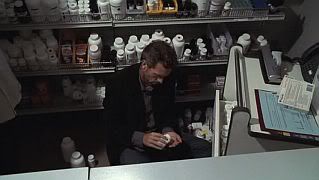
Anyway, Brandon starts to feel a little better and then his white blood cell count drops dangerously low and is put into isolation. After finding inspiration in almost picking up the wrong bottle on a Vicodin run, House spends quite a bit of time considering a new hypothesis. He admits that the principle of Occam's Razor still held and that colchicine poisoning due to a pharmacy mix-up for cough medicine explains all the symptoms. Additionally, Brandon got worse because someone continued to give Brandon his "cough medicine". The team hits a snag when Brandon's mother claims that the cough medicine was a round and yellow pill, just like the correct pill at the pharmacy. After some moping around and doubt, House sees that Brandon's worsening condition matches the progression of colchicine poisoning and bluffs that Brandon must have used ecstasy in the past which might be cut with with colchicine. The treatment for colchicine poisoning is started and Brandon improves.

Meanwhile, House, dissatisfied with the ecstasy explanation digs through the pharmacy for the different forms of colchicine. In another scene, Brandon comments on how the cough medicine Cameron gives him has a letter on them which his old ones do not. In the pharmacy, the determined House finds the colchicine pill that looks similar to the cough medicine.

On a side note, one of my favorite clinic patients appeared in this episode: