Showing posts with label Medicine in Comics. Show all posts

Sunday, November 6, 2011

Four Batman Villains with Medical Degrees

Lately, I have been working on getting through Batman: Akrham City when I have time (which is not much). One of the major villains of the game is Dr. Hugo Strange who has been the mastermind behind the development of Arkham City.  I've come to realize that there are an inordinate number of Batman villains with medical degrees, let alone an army of comic book supervillains that have higher degrees. Interestingly enough, most of evil physicians are either surgeons or psychiatrists. Luckily, I do not have much interest in either specialty. Here is more on five Batman villains that are physicians.


1. Dr. Hugo Strange

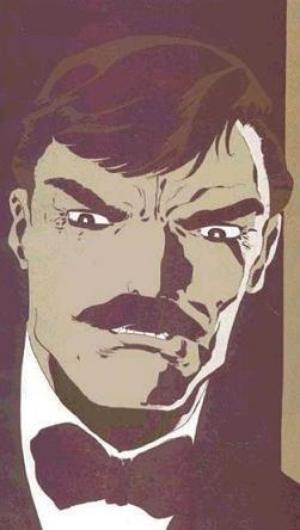
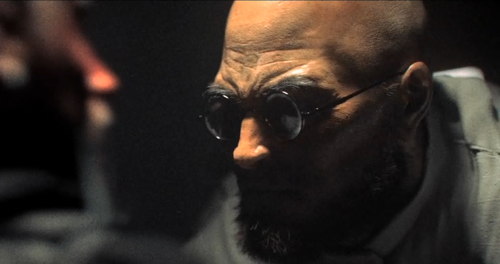
Dr. Hugo Strange, from the teaser trailer for Batman: Arkham City
Not to be confused with Dr. Stephen Strange, one of my favorite Marvel characters, Hugo Strange is a psychiatrist that, in the classic stories, is obsessed with Batman and deduces his true identity (an element preserved in Batman: Arkham City). Although Strange is a genius, he is also a little psychotic and even dressed up as Batman. Another one of the classic Dr. Strange stories is his involvement in the creation of what has become known as the Monster Men. This hearkens back to the original Batman comic series in the 1940s and has been retold and referenced over and over again.

For the most part, Hugo Strange has been largely unknown to the general public but I imagine that Batman: Akrham City will solidify his legacy as one of Batman's greatest adversaries. One of my favorite appearances of Dr. Strange was in a television show that defined my child hood, Batman: The Animated Series. In the episode, "The Strange Secret of Bruce Wayne", Strange runs a sham spa for wealthy and prominent individuals to learn their secrets using a machine he has developed. When he discovers that Bruce Wayne is secretly Batman, he tries to auction off the information to Joker, Two-Face, and Penguin, a nod to a similar storyline from the comics. Batman being Batman, cleverly discredits Strange and gets the rogues to turn on him.


 Dr. Matthew Thorne, the Crime Doctor
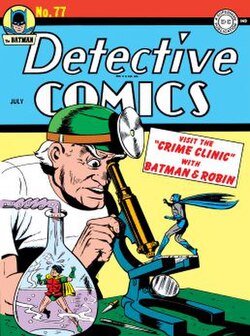
Detective Comics 77.jpg
The Crime Doctor, art by Bob Kane
This one is a little more obscure.  In Post-Crisis contunity, the Crime Doctor is the brother of crime boss Rupert Thorne.  He is a physician that treats criminals for money. 

I mostly know this one from Batman: The Animated Series from the episode "Paging the Crime Doctor."  The wonderful creators of the show did a retake on the character (as they did for many of the Batman villains) as a former classmate of Dr. Thomas Wayne, Batman's father, and Dr. Leslie Thompkins, one of the few people to know that Bruce is Batman.  Thorne lost his license to practice and is working for his brother Rupert to get it back.  


Dr. Thomas Elliot, Hush

Thomas Elliot is a childhood friend of Bruce Wayne that is both spiteful for Bruce's father saving the life of his mother and is envious of the life he leads.  Elliot tried to kill his parents when he was a young boy by cutting the brake lines in his father's car.  While his father died, his needy mother survived and he was forced to care for years.  Elliot hated the Waynes for his fate and, once he figured out that Bruce was Batman, he planned a very elaborate revenge. I am not going to lie.  I am not really a huge Hush fan.  I know a lot of people think that Jeph Loeb and Jim Lee's Batman: Hush is one of the greatest Batman stories ever.  Personally, it was another Jeph Loeb parade of charaters that was prettied up by Jim Lee's art.  It isn't bad but it isn't amazing either.  The subsequent Hush story lines have been just okay, too.  Usually he tries to come up with another elaborate plan that fails miserably, all while he constantly quotes Aristotle and further explorations of his mommy issues are flashbacked on.  That being said, I think that Paul Dini's retake of the character in Batman: Arkham City has some potential and perhaps he won't seem so stupid in the New DC Universe.
Hush, art by Jim Lee


Dr. Simon Hurt 

This guy actually has a bunch of names and his true identity is still a little obscured, probably on purpose given that he is one of Grant Morrison's characters.  Well that's not entirely true.  Grant Morrison actually took a very minor character from Batman #156 ("Robin Dies at Dawn") and gave him a name and a time spanning role in the DC Universe.  Hurt is the doctor who conducted the isolation experiment on Batman from "Robin Dies at Dawn".  In Batman: R.I.P, it was revealed that this was in reality a way to implant psychological cues in Batman's head.  I will probably leave it at that because explaining Grant Morrison's origin for why Dr. Simon Hurt is an apparently immortal ancestor of the Wayne family ties into a bunch of very complicated storylines that all tie into one another.  Suffice it to say it has to do with pretty much everything Grant Morrison has wrote for DC in the past six years.

Dr. Simon Hurt, art by Tony Daniel

Friday, October 28, 2011

Radion Bullet vs. Rabies Virus

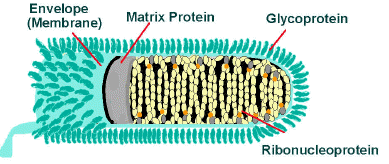
The radion bullet from Final Crisis that was used to kill Orion and then used on Darkseid looks a lot like the rabies virus:


Friday, September 23, 2011

Virulence Factor: Will Power

Currently, I am in the midst of studying viruses in medical school. Being the comic book geek that I am, my studies have reminded me of a certain member of the Green Lantern Corps:


Meet Leezle Pon, Green Lantern of Sector 119. Not only is he the smallest member of the Corps, he is a super-intelligent smallpox virus. Seeing as how it is debatable whether viruses are even true organisms, it is amazing that Leezle Pon has a name, a gender assignment, sentience, and the will power to overcome fear that is requisite of all Green Lanterns. If you still are not amazed, take into account that Leezle Pon has an archnemesis: Despotellis, another intelligent virus who is responsible for the death of Leezle Pon's partner (must have been some interesting stakeouts).

If you are wondering what creative mind came up with such a concept as a Green Lantern smallpox virus, look no further than Alan Moore. That's right. The same Alan Moore who is the genius behind Watchmen, V for Vendetta, The League of Extraordinary Gentlemen, From Hell, and much, much more. Leezle Pon was not the only weird Green Lantern Moore created for the Corps. Perhaps even more famous is his creation of Mogo, a Green Lantern who is an entire sentient planet.

Thursday, September 15, 2011

Topical Glutamine?

Don't get me wrong. I am a big Scott Snyder fan. American Vampire is one of the most interesting takes on vampires in a long time and his run on Detective Comics is one I will always remember. However, as a medical student, I could not help but notice a weird medical factoid that showed up in The New 52's Swamp Thing #1. In the opening pages, we find Dr. Alec Holland, brilliant botanist and former Swamp Thing, doing some good ol' hard labor, presumably to put his life as Swamp Thing behind him. Holland has apparently been doling out medical advice to his coworkers, telling one man to put cabbage on his knee to relieve the joint pain because cabbage is a good source of glutamine.

This set off a red light in my head. Glutamine for joint pain? Glutamine is not an anti-inflammatory and is not available in topical form (however, cabbage is indeed a good source of glutamine). Glutamine is medically used to maintain nutrition in people with short bowel syndrome and is often available as a supplement for muscle growth.

I really think that Mr. Snyder meant glucosamine. Glucosamine is a biochemical precursor to glycosaminoglycans which is a major component of joint cartilage. It is believed to have some anti-inflammatory action and can be applied topically. However, glucosamine is available over the counter so the construction would not need to go see a doctor and get a prescription. But at least Dr. Holland looked smart to the layman and earned his respect, right?

Interestingly enough, I came across a POEM (Patient-Oriented Evidence that Matters) that said that glucosamine and non-steroidal anti-inflammatory drugs (NSAIDS, like aspirin and ibuprofen) had no greater effect than placebo when used for knee osteoarthirtis (NSAID = glucosamine = chondroitin = placebo for knee OA, Essential Evidence Plus). So maybe it did not matter that Dr. Holland mixed up glutamine and glucosamine, after all.
.

Thursday, June 9, 2011

Comic Book Patients: Thom Kallor

Starman/ Star Boy
Condition: Schizophrenia

Thom Kallor as Starman by Alex Ross 
If you read comics or if you ever will, you will start to notice that there are plenty of comic book characters with interesting medical conditions (how half of them got their powers is related to their medical conditions).  

Since I am currently studying brain, mind, and behavior, I thought it would be appropriate to talk about Thom Kallor better known as Star Boy of the Legion of Superheroes and Starman (one of many).  As Starman, Thom has traveled back in time to the 21st century with a secret mission.  Due to the primitive medicine of our time, Thom's condition becomes symptomatic and he is revealed to have schizophrenia.  Apparently, there's no better way to hide a secret mission in a world full of telepaths than to assign it to a schizophrenic man (what a plot device!).

Starman seems to exhibit the cognitive and disorganized symptoms of schizophrenia.  These include incoherence, looseness of association, and impaired attention.  Arguably, these symptoms are some of the more entertaining ones that have been seen.  Schizophrenics can also exhibit hallucinations and delusions (positive symptoms which can also be entertaining but also scary at times) or be more passive as if they were not really in their own heads (negative symptoms).  

It is true that schizophrenics do not always respond to modern medications and typically these medications are best at  reducing the positive symptoms (Geoff Johns did his homework).  Today, guidelines recommend managing schizophrenia with a class of drugs called atypical antipsychotics which include clozapine, risperidone, and olanzapine.  The exact mechanism of these drugs is not quite clear but all target dopamine pathways, probably antagonizing dopamine receptors.

The success of antipsychotics has supported the dopamine hypothesis to explain schizophrenia.  Dopamine is a neurotransmitter found in many areas of the brain.  It is believed that the excessive release of dopamine in the mesolimbic pathway leads to the positive symptoms of psychosis.  This is further supported by the fact that cocaine and amphetamines, drugs that cause higher levels of dopamine to be present in neural synapses, can induce psychosis.  

Glutamate is another neurotransmitter of interest in schizophrenia.  The glutamate hypothesis of schizophrenia proposes that lower levels of glutamate binding to NMDA receptors in the brain can explain both positive and negative symptoms of schizophrenia.  Drugs that antagonize NMDA receptors such as PCP and ketamine have been shown to induce psychosis.

Finally, on an interesting note to all you legalizers out there, use of cannibis (i.e. marijuana) has been linked to risk of earlier onset of schizophrenia.  Of course these links are somewhat controversial (if you think there are no scientists that smoke weed out there then you must live in Disney World) but at least one study shows that people with a certain polymorphism in an enzyme known as catechol-O-methyltransferase (COMT) are more susceptible to psychosis with use of cannabis in early adolescence.

Thom Kallor in Justice Society of America #12; pencils by Dale Eaglesham, inks by Ruy Jose, and colors by Alex Sinclair
  

Monday, June 6, 2011

Five of My Favorite Comic Book Doctors

Doing something a little different this time around.  Physicians are everywhere in comic books and it's always fun to see the medicine (good and bad) intertwined in the stories.  These are not necessarily the best doctors in the comics, just my personal favorites.

#5 - Thor
Thor's debut in Journey into Mystery #83.
Art by Jack Kirby and Joe Sinnott
Yes.  That Thor.  Originally, Thor's origin had Odin placing Thor into the body of partially disabled medical student, Donald Blake (the series finale to House, in my opinion, would be awesome if he found Mjolnir and became Thor).  If the name Donald Blake sounds familiar, there were references made to him in the Thor movie as being Jane Foster's ex-boyfriend.  Originally, Jane Foster was a nurse that worked with Blake and the two become involved.  Can you blame her?  "Hey there baby, not only am I a doctor but I am also the Norse god of thunder."  In the magic of retcons, this origin for Thor is no longer official continuity and Foster has become a doctor, herself.


#4 - Dr. Thomas Wayne
Thomas Wayne in Batman: The Long Halloween #9
Art by Tim Sale
Bruce Wayne's dad seems to have been a very well respected surgeon in the DC Universe, not to mention a renowned philanthropist (which is something given he lives in a city that epitomizes the dark side of any urban environment).  I've enjoyed Paul Dini's expansion of Gotham's old families in his Hush stories (another comic book physician, but one I find annoying at times).  Dini has portrayed a young Thomas Wayne as a womanizing, party-boy who is changed by his meeting with his future wife Martha Kane.

In current continuity (I think), Dr. Wayne was actually the first Batman, wearing a bat-themed costume at party one evening and stopping a crime.  The costume he wore hung in the Batcave until it was stolen by Dr. Simon Hurt who is also a doctor and actually a devil-worshiping Wayne ancestor also named Thomas (thanks to Grant Morrison).  Of late, Dr. Wayne has been revealed to be the Batman in the latest DC event, Flashpoint.  I hear good things about it but I am personally tired of these large story arcs.

Thomas Wayne as Batman in Flashpoint #1; Art by Andy Kubert and Sandra Hope

#3 - Dr. Soranik Natu
Soranik Natu in Green Lantern Corps: Recharge # 5; art by Patrick Gleason
This one may be one of my more obscure selections and proof I read way too many comics.  Natu is a neurosurgeon from Korugar, the home planet of Sinestro, former Green Lantern and later archnemesis of Hal Jordan, Green Lantern of Earth (don't ask me what his status is now, I didn't read Brightest Day).  Dr. Natu has also been revealed as the daughter of Sinestro and the niece of Abin Sur, the Green Lantern who gave the ring to Hal Jordan.  Last I heard, Natu was dating Kyle Rayner, another Green Lantern from Earth.  I think I like Natu because 1) how many times do you see an alien physician? and 2) how could would it be to be a physician with a Green Lantern ring?  I really hope Natu survives the upcoming revamp of the DC Universe.  She's good for Kyle and definitely one of the more interesting supporting cast in the Green Lantern saga.

#2 - Dr. Strange
Dr. Strange by Gabriele Dell'Otto
Dr. Stephen Strange was (yet another) neurosurgeon who was (yet again) arrogant and needed a lesson in humility.  Strange's hands are crippled in a car accident, ruining his ability to perform surgery.  Trying everything he can to get his hands fixed, Strange ends up in the Himalayas where, after proving the good in himself, he is taught the mystic arts by the Ancient One.  Strange is one of my favorite characters in the Marvel universe and definitely one of the most fun to play in Marvel Ultimate Alliance.  I love the following image from Let's Be Friends Again which nods to House.
Dr. Strange ala House, MD; art by Chris Haley of Let's Be Friends Again

#1 - Dr. Mid-nite (Pieter Cross).
With respect to former Dr. Mid-nites, Dr. Charles McNeider and Dr. Beth Chapel, Dr. Pieter Cross has been the greatest to hold the title of Dr. Mid-nite.  In a mini-series by Matt Wagner (one of my favorite comic writers), Cross is a physician/ urban crusader that reminds me of both the fictional Dr. Thomas Wayne and the real Dr. Paul Farmer.  After going after the Terrible Trio (a set of Batman villains) who are pushing a new drug on the streets, Cross is injected with the drug and gets into a car accident.  Initially believing he was blind, Cross finds that he can see in the dark (conveniently like the former Dr. Mid-nites) and assumes the Mid-nite mantle.  Later, he joined the JSA and has since become the DCU's go-to medical guy.  Mid-nite has had stories written by some of my favorite writers including Matt Wagner, Scott Beatty, and Geoff Johns (before his head got bigger than Hector Hammond's).
Dr. Mid-nite from the cover of JSA Classified #19; art by Rags Morales